Stepping into the world of home bartending, especially with whiskey, can feel a bit like walking into a massive library without a Dewey Decimal System – overwhelming, right?
I vividly recall my own initial attempts, staring at rows of bottles, wondering where on earth to begin beyond just pouring a neat dram. It felt less like a sophisticated hobby and more like a guessing game with expensive ingredients.
But here’s the secret: it’s truly a journey, a delightful exploration of flavors and history that’s becoming incredibly accessible thanks to the vibrant online community and the rise of boutique distilleries.
Forget the old gatekeepers; today’s whiskey scene is all about personal discovery and honest enjoyment, embracing everything from classic bourbon sours to innovative, sustainable rye experiments.
We’re seeing a fascinating shift where people are increasingly valuing craft, traceability, and even the story behind the spirit, moving beyond just big-name brands.
The future of home bars is less about a massive collection and more about curated quality and mindful consumption, often guided by fantastic online resources that cut through the noise.
It’s about finding *your* perfect pour and feeling confident crafting it, even as the industry navigates challenges like climate impact on sourcing or new regulations affecting distribution.
It’s a dynamic, exciting space to be in. Let’s dive deeper below.
Demystifying the Bottle: Choosing Your Inaugural Whiskeys
Stepping into the vast world of whiskey can feel like being a kid in a candy store, but instead of gummies, it’s a dizzying array of labels, regions, and price points.
When I first started, I made the classic mistake of buying whatever looked cool or was on sale, only to discover some bottles sat untouched for months.
What I’ve learned since is that starting your home bar journey isn’t about collecting every bottle, but about curating a thoughtful selection that truly speaks to your palate.
My advice? Don’t break the bank on your first few bottles. Focus on variety and accessibility.
Think about the types of flavors you generally enjoy. Do you lean towards sweet and smooth, or do you prefer something with a bit more spice and a kick?
When I advise friends on their first whiskey purchases, I always suggest a good Bourbon, a reliable Scotch (specifically a Speyside or Highland malt for a gentler introduction), and perhaps a versatile Rye.
Bourbon, with its corn-heavy mash bill, often brings notes of vanilla, caramel, and a delightful sweetness that makes it incredibly approachable, both neat and in cocktails.
My personal go-to for a long time was a widely available Bourbon that, while not ultra-premium, offered consistent quality and value. Scotch, on the other hand, can be a whole different beast.
Starting with a peaty Islay might be too much for a beginner, so opt for something lighter, perhaps with fruity or floral notes. For instance, a lovely Speyside single malt opened my eyes to the elegance and complexity Scotch could offer without the smoke bomb.
Rye, with its spicy, peppery character, is a fantastic backbone for classic cocktails like the Old Fashioned or a Manhattan, adding a punch that Bourbons sometimes can’t.
Remember, the goal here is to establish a foundation, bottles you’ll actually reach for and enjoy mixing with, rather than display pieces.
1. Identifying Your Palate Preferences
Before you even think about brand names, pause and consider what kinds of flavors genuinely excite you. Are you drawn to rich, dessert-like sweetness, or do you prefer something with a sharp, zesty edge?
Perhaps you enjoy smoky notes from a campfire, or the delicate warmth of baking spices. When I first started, I was blindly following recommendations without truly understanding *why* certain whiskeys were popular.
It was only when I began to pay attention to tasting notes on labels and, more importantly, *my own reactions* to different spirits that I began to build a true understanding.
For instance, I initially thought I’d love heavily peated Scotch, but quickly discovered its intensity was overwhelming for my everyday sipping. Instead, I gravitated towards bourbons with pronounced vanilla and caramel, and lighter, fruitier Scotches.
Pay attention to how a whiskey feels on your tongue—is it oily, thin, warming, or fiery? These sensations, combined with the flavors, will guide you towards your personal whiskey compass.
It’s a bit like learning to cook; you start with basic ingredients you like, then slowly expand your repertoire.
2. The Essential Starter Trio: Bourbon, Scotch, and Rye
In my journey, I’ve found that having a foundational trio makes all the difference when you’re building your home bar. It provides versatility and a great educational experience.
* Bourbon: Often perceived as the friendliest gateway whiskey, Bourbon’s inherent sweetness and approachable flavor profile (think caramel, vanilla, oak, sometimes a hint of dried fruit) make it a fantastic starting point.
It’s incredibly versatile, shining equally well in a simple Highball or a more complex Old Fashioned. My personal discovery of how well Bourbon pairs with fresh citrus in a Whiskey Sour was a game-changer early on.
* Scotch (Blended or Lighter Single Malt): Don’t jump straight into the smoky depths of Islay malts unless you’re feeling adventurous. Start with a reputable blended Scotch, which offers a smoother, more balanced profile, or a single malt from the Speyside or Highland regions.
These often present lighter, fruitier, or honeyed notes, providing a stark but pleasant contrast to Bourbon. I remember being so surprised by the delicate floral notes in my first Speyside, a world away from the peppery rye I had just tried.
* Rye: This is where things get a bit spicier and bolder. Rye whiskey, by law, must be made from at least 51% rye, giving it a distinctive peppery, herbaceous, and often dry character.
While it might be a bit much to sip neat for some beginners, it truly excels in cocktails. The spice of a good rye cuts through sweetness and adds depth, making it indispensable for many classic American whiskey drinks.
I learned this the hard lesson way when trying to make a truly authentic Sazerac without rye – it just wasn’t the same!
Essential Gear: Elevating Your Home Bar, One Tool at a Time
When I first decided to get serious about mixing drinks at home, I thought all I needed was a bottle of whiskey and a glass. Boy, was I wrong! My early attempts at cocktails were… well, let’s just say they were more enthusiastic than effective.
I remember trying to stir a Manhattan with a dinner spoon, resulting in a cloudy mess rather than the crystal-clear concoction I envisioned. It was a clear sign that proper tools, while not needing to be extravagant, make a world of difference.
Investing in a few quality pieces not only improves your drinks but also enhances the whole experience, turning a simple pour into a ritual. You don’t need to outfit your bar like a Michelin-starred restaurant, but a few key items will transform your capabilities.
From personal experience, a good shaker and a sturdy jigger are non-negotiable for consistent results. These aren’t just gadgets; they’re extensions of your newfound craft, helping you achieve precision and elegance in every glass.
The initial investment for these tools can feel like a lot, but think of it as building a foundation. You’ll be surprised how much more confident you feel when you have the right equipment in hand.
I recall the sheer joy when I finally managed to craft a perfectly chilled and diluted Old Fashioned after getting a proper mixing glass and bar spoon.
It was a revelation! It’s about building a toolbox, not just buying pretty things. The right tools ensure consistency, which is paramount in cocktails.
You want to be able to replicate that delicious drink you made last week, and proper measurements and techniques are key to that.
1. The Non-Negotiable Core: Shakers, Jiggers, and Strainers
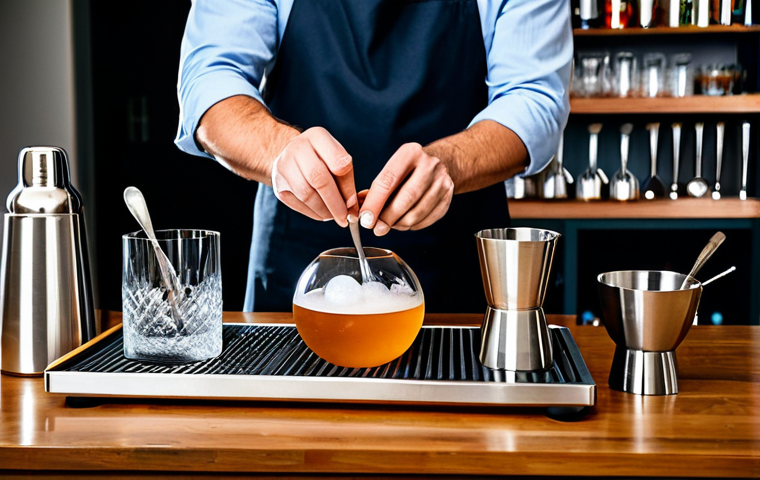
These are the holy trinity for any aspiring home bartender. Without them, you’re essentially trying to build a house with only a hammer. * Shaker: There are two main types: the Cobbler (three-piece, with a built-in strainer) and the Boston (two-piece, requiring a separate strainer).
I started with a Cobbler because it felt less intimidating, but quickly graduated to a Boston shaker for its versatility and ease of cleaning. A good shaker allows you to properly chill and dilute your ingredients, crucial for a balanced cocktail.
* Jigger: Precision is everything in cocktails. A jigger, typically double-sided with different measurements (e.g., 1 oz and 2 oz), ensures you’re adding the correct amount of each ingredient.
Trust me, eyeballing quantities leads to inconsistent and often disappointing results. I learned this the hard way when a favorite cocktail ended up tasting wildly different each time because I was guessing the pours.
* Strainer: If you use a Boston shaker or a mixing glass, a strainer (usually a Hawthorne or Julep strainer) is essential to separate your perfectly mixed drink from ice and muddled ingredients.
It prevents unwanted bits from ending up in your glass, leading to a much smoother drinking experience.
2. Beyond the Basics: Mixing Glasses, Bar Spoons, and Ice Molds
Once you’ve mastered the basics, these tools will elevate your game significantly. * Mixing Glass: For stirred cocktails (those without citrus, cream, or egg whites), a heavy-bottomed mixing glass is indispensable.
It allows for proper dilution and chilling without aerating the drink, resulting in that beautiful, clear appearance. I initially thought stirring in any old glass would do, but the thermal mass of a proper mixing glass truly makes a difference.
* Bar Spoon: Much longer than a regular spoon, a bar spoon is designed for stirring in a mixing glass. Its length allows you to reach the bottom and ensure all ingredients are thoroughly combined and chilled.
Some even have a muddler end, adding to their utility. * Ice Molds: This is where you move from “making drinks” to “crafting experiences.” Large, slow-melting ice cubes (spheres or large squares) minimize dilution and keep your drink colder for longer.
The visual appeal alone makes them worth the small investment. I was skeptical at first, but using a large, crystal-clear ice cube in an Old Fashioned completely transformed the drink’s presentation and how slowly it diluted.
It just *feels* more special.
| Tool | Primary Use | Why It Matters (From My Experience) |
|---|---|---|
| Shaker (Boston or Cobbler) | Mixing & chilling cocktails that require aeration (e.g., sours, margaritas). | Achieves proper dilution & temperature; crucial for foamy textures. My early attempts at sours without a shaker were just sad. |
| Jigger | Precise measurement of spirits & modifiers. | Ensures consistent, balanced cocktails every time. No more guessing, no more wasted ingredients on unbalanced drinks. |
| Strainer (Hawthorne or Julep) | Separating ice & muddled ingredients from the finished drink. | Results in a smooth, clear cocktail, free of unwanted bits. A gritty drink is a ruined drink, in my opinion. |
| Mixing Glass | Stirring & chilling spirit-forward cocktails (e.g., Old Fashioned, Manhattan). | Maintains clarity & proper dilution without aeration. Makes a Manhattan look professional, not cloudy. |
| Bar Spoon | Stirring drinks in tall mixing glasses, layering. | Allows for thorough, gentle chilling & mixing. My standard spoons just weren’t long enough or elegant enough for the job. |
| Ice Molds (Large Cubes/Spheres) | Creating slow-melting ice for sipping spirits & classic cocktails. | Minimizes dilution, keeps drinks colder longer, and looks incredibly sophisticated. A large ice sphere just elevates everything. |
Unlocking Flavor: A Beginner’s Guide to Whiskey Styles
Remember that feeling of being overwhelmed in the whiskey aisle? A lot of that confusion stems from not knowing the fundamental differences between styles.
When I started, “whiskey was whiskey” to me, and I couldn’t articulate why a Bourbon tasted distinct from a Scotch, let alone distinguish between different Scotches.
It was like trying to appreciate classical music without understanding the difference between a symphony and a concerto. Understanding the core characteristics of each major whiskey category was a pivotal moment in my home bartending journey.
It wasn’t just about memorizing facts; it was about recognizing patterns in flavor, appreciating the craft behind each bottle, and ultimately, making more informed choices for sipping and mixing.
This knowledge truly transformed my appreciation, allowing me to not just drink whiskey, but to *experience* it. It also helped me avoid pairing mistakes, like trying to make a light, fruity cocktail with a heavily peated Scotch, which ended in a rather jarring flavor clash!
I quickly realized that the magic lay in understanding what makes each style unique – from the grains used, to the aging process, to the geographical origin.
This understanding doesn’t make you a snob; it makes you an informed enthusiast who can truly savor and discuss what you’re drinking. It also opens up a whole new world of cocktail possibilities, as you learn which whiskey profiles work best with certain mixers and flavor combinations.
For example, knowing that Bourbon tends to be sweeter and richer meant I could confidently pair it with citrus or bitters, while understanding rye’s spicier character guided me towards robust vermouths for Manhattans.
This foundational knowledge really empowered me to experiment more boldly and successfully.
1. The American Classics: Bourbon, Rye, and Tennessee Whiskey
The American whiskey landscape is rich and diverse, offering a spectrum of flavors. * Bourbon: A quintessential American spirit, Bourbon must be made from at least 51% corn, aged in new, charred oak barrels, and distilled to no more than 160 proof, then entered into the barrel at no more than 125 proof.
This combination results in its signature sweet, vanilla, caramel, and often oak-driven profile. I love Bourbon for its inherent warmth and versatility; it’s just as delightful neat as it is the star of a classic Old Fashioned.
My first real “aha!” moment with Bourbon was realizing how much the charred oak contributes to those rich vanilla notes I adore. * Rye Whiskey: Bold, spicy, and often peppery, Rye whiskey requires at least 51% rye in its mash bill.
It offers a sharper, drier character compared to Bourbon, with notes of baking spices, mint, and sometimes a herbal quality. While some find it too assertive for sipping neat early on, I’ve come to appreciate its distinct punch in cocktails.
A good Rye is irreplaceable for classic American cocktails like the Sazerac or a well-structured Manhattan. I remember finding its spiciness a bit much at first, but now I crave that peppery kick in certain drinks.
* Tennessee Whiskey: Often confused with Bourbon, Tennessee whiskey undergoes an additional step called the Lincoln County Process, where it’s filtered through sugar maple charcoal before aging.
This charcoal mellowing gives Tennessee whiskey a distinct smoothness and often softens some of the harsher notes found in younger whiskeys. My experience has been that it offers a very approachable, easy-drinking profile, often with a slightly sweeter and cleaner finish than many Bourbons.
2. The Global Powerhouses: Scotch, Irish, and Japanese Whisky
Beyond American shores, the world of whisky offers incredible diversity and heritage. * Scotch Whisky: Hailing from Scotland, Scotch is known for its incredible regional variety.
It must be aged for at least three years in oak casks. * Single Malt: Made from 100% malted barley at a single distillery. My personal journey with Scotch started with a gentle Speyside, full of fruit and floral notes, before gradually exploring the smokier, peaty Islay malts.
I still remember the shock of my first heavily peated dram – a true sensory adventure! * Blended Scotch: A mix of single malt and grain whiskies from multiple distilleries.
Often smoother and more approachable, making them excellent entry points. * Irish Whiskey: Traditionally triple-distilled and aged for at least three years, Irish whiskey is known for its smoothness and light, often fruit-forward profile.
My first taste of an Irish single pot still whiskey was eye-opening; its creamy texture and spice were utterly unique. It’s a wonderfully easy-drinking spirit.
* Japanese Whisky: Inspired by Scotch, Japanese whisky often features meticulous craftsmanship and a balance of flavors. They can range from delicate and floral to peaty and robust.
I’ve found Japanese whiskies to be incredibly refined and nuanced, often offering subtle layers of flavor that reveal themselves slowly. They tend to be on the pricier side, but for a special occasion, they are truly magnificent.
Beyond the Classics: Simple & Striking Whiskey Cocktails
Once you’ve got your core whiskeys and essential tools, the real fun begins: mixing! When I first started, I was intimidated by cocktail recipes, thinking they were complex formulas only a seasoned bartender could master.
My initial attempts were often over-sweetened or lacked balance, leading to a lot of wasted ingredients and mild frustration. What I quickly discovered, however, is that many truly fantastic whiskey cocktails are surprisingly simple, built on a few core principles and quality ingredients.
It’s less about being a wizard and more about understanding how flavors interact. My breakthrough came when I realized that even a basic Old Fashioned could be elevated by focusing on the quality of the bitters and ice, not just the whiskey.
This revelation completely changed my approach and encouraged me to experiment more freely. The key is to start with a few foolproof recipes that teach you fundamental techniques and flavor pairings.
These aren’t just drinks; they’re your training ground for understanding balance – the interplay of sweet, sour, bitter, and spirit. As you gain confidence, you’ll naturally start to tweak ratios or swap ingredients, discovering your own signature variations.
Don’t be afraid to make mistakes; I’ve certainly poured my share of less-than-perfect drinks, but each one was a valuable lesson. The joy of creating a delicious drink for yourself or a friend, from scratch, is incredibly rewarding.
It’s about empowering yourself to craft experiences, not just consume beverages.
1. Mastering the Old Fashioned: A Timeless Classic
The Old Fashioned is often considered the king of whiskey cocktails, and for good reason: it’s deceptively simple yet profoundly satisfying. My journey with this drink started with a very basic version, but it evolved as I learned the nuances.
* Ingredients: Whiskey (Bourbon or Rye work best), a sugar cube or simple syrup, Angostura bitters, and a large ice cube. * Technique: Place a sugar cube in an Old Fashioned glass, add 2-3 dashes of Angostura bitters, and a tiny splash of water (or a few drops of simple syrup).
Muddle until the sugar dissolves. Add a large ice cube. Pour in 2 oz (60ml) of your chosen whiskey.
Stir gently for about 30 seconds until well chilled and slightly diluted. Garnish with an orange peel, expressed over the drink. * My Tip: The secret to a truly great Old Fashioned lies in dilution and chilling.
Don’t rush the stir! And seriously, invest in good quality large ice. It makes all the difference in keeping the drink cold without over-diluting it too quickly.
I also found that a good quality simple syrup makes the dissolving process much smoother than a sugar cube for beginners, though the latter adds a touch of traditional ritual.
2. The Zesty Delight: Whiskey Sour and Its Variations
If you love a bright, refreshing drink, the Whiskey Sour is your perfect match. It’s an ideal cocktail for understanding the balance of sweet and sour.
* Ingredients: Whiskey (Bourbon is classic here), fresh lemon juice, simple syrup, and optionally, an egg white for a frothy texture. * Technique: In a shaker, combine 2 oz (60ml) whiskey, 0.75 oz (22.5ml) fresh lemon juice, and 0.75 oz (22.5ml) simple syrup.
If using egg white, add one egg white (optional, but highly recommended for texture). * Dry Shake (with egg white): Shake vigorously without ice for 15-20 seconds to emulsify the egg white.
* Wet Shake: Add ice to the shaker and shake again vigorously until well chilled (about 15-20 seconds). Strain into a chilled coupe or rocks glass with fresh ice.
Garnish with a lemon slice and a dash of Angostura bitters. * My Tip: Fresh lemon juice is non-negotiable here. Bottled lemon juice just doesn’t cut it; it makes the drink taste flat and artificial.
Also, don’t be scared of the egg white! It creates a beautiful, creamy foam that elevates the drink, and the risk of salmonella is incredibly low, especially with pasteurized eggs.
I was hesitant at first, but now I can’t imagine a sour without it.
3. The Sophisticated Sip: Manhattan and Boulevardier
For those who prefer a spirit-forward, aromatic drink, the Manhattan and its cousin, the Boulevardier, are superb choices. * Manhattan Ingredients: Rye whiskey (classic, but Bourbon works too), sweet vermouth, and Angostura bitters.
* Manhattan Technique: Combine 2 oz (60ml) whiskey, 1 oz (30ml) sweet vermouth, and 2-3 dashes of Angostura bitters in a mixing glass with ice. Stir well until thoroughly chilled (about 30 seconds).
Strain into a chilled coupe glass. Garnish with a brandied cherry. * Boulevardier Ingredients: Bourbon or Rye, Campari, and sweet vermouth.
* Boulevardier Technique: Combine 1.5 oz (45ml) Bourbon or Rye, 1 oz (30ml) Campari, and 1 oz (30ml) sweet vermouth in a mixing glass with ice. Stir well until thoroughly chilled.
Strain into a chilled coupe or rocks glass. Garnish with an orange peel. * My Tip: The quality of your vermouth truly matters in these cocktails.
An opened bottle of vermouth will degrade over time, so store it in the refrigerator and try to use it within a month or two for optimal flavor. I once used an old, oxidized vermouth and the Manhattan tasted completely off – a stark reminder that every ingredient counts.
The Finer Points: Mastering Ice, Glassware, and Garnish
It’s easy to focus solely on the liquid in your glass, but I’ve come to learn that the experience of a great whiskey cocktail is holistic. My early attempts often overlooked the importance of ice, serving drinks in mismatched tumblers, and garnishing with whatever I found in the fridge.
The results were drinks that tasted fine but lacked that certain “oomph.” It was only when I started paying attention to the details – the crystal clarity of a large ice cube, the weight of a proper rocks glass, the aromatic burst from a freshly expressed orange peel – that my home bar truly began to shine.
These aren’t just aesthetic choices; they profoundly impact the temperature, dilution, and overall sensory enjoyment of your drink. It’s about respecting the spirit and the craft.
I remember distinctly the first time I used a large, sphere-shaped ice cube in an Old Fashioned. The way it slowly melted, keeping the drink perfectly chilled without over-diluting it, was a revelation.
It wasn’t just cold; it was *elegantly* cold. This small detail transformed a good drink into a truly exceptional experience. Similarly, the right glassware enhances the aroma and presentation, while a fresh garnish adds layers of scent and visual appeal.
These elements are the unsung heroes of home bartending, elevating your creations from merely palatable to truly memorable. It’s about crafting a moment, not just a mixture.
1. The Ice Factor: More Than Just Chilling
Ice is arguably the most crucial ingredient in any cocktail, yet it’s often the most overlooked. Its primary roles are chilling and dilution, both vital for balance.
* Quality over Quantity: Forget those tiny, fast-melting cubes from your freezer’s ice maker. They dilute your drink too quickly and unevenly. Invest in large format ice molds (silicone molds for 2-inch cubes or spheres are widely available).
These melt slowly, providing optimal chilling with minimal dilution, allowing the flavors of your whiskey to shine through without becoming watery. I swear by large ice cubes for any whiskey I’m sipping neat or using in a spirit-forward cocktail.
* Clarity Matters: For an extra touch of professionalism, consider clear ice. While not strictly necessary, clear ice melts even slower and looks stunning.
You can achieve this by using directional freezing methods (e.g., in a small cooler in your freezer) or by buying specialized molds. My personal journey into clear ice was a game-changer for my photos and for impressing guests.
The visual appeal is undeniable.
2. The Right Vessel: Choosing Your Glassware Wisely
The glass you choose isn’t just a container; it’s an integral part of the drinking experience, influencing aroma, temperature, and presentation. * Rocks Glass (Old Fashioned Glass): Essential for drinks served over ice, like the Old Fashioned, Neat pours, or Whiskey Sours.
Its wide mouth allows for aromatic appreciation, and its sturdy build makes it comfortable to hold. I’ve accumulated a few different styles over the years, from heavy crystal to more minimalist designs, and each one brings a different feel to the experience.
* Coupe Glass: Elegant and classic, the coupe is perfect for “up” drinks (chilled, strained, no ice), like a Manhattan or a chilled Whiskey Sour. Its broad, shallow bowl allows for easy sipping and showcases the drink’s color beautifully.
I love the vintage feel a good coupe glass brings to a cocktail, making even a simple drink feel luxurious. * Highball Glass: Tall and slender, ideal for drinks topped with soda or tonic, like a Whiskey Highball.
It helps maintain carbonation and keeps the drink cold. My go-to for a refreshing Bourbon and Ginger Ale is always a tall, slender highball.
3. The Finishing Touch: The Art of Garnish
A garnish isn’t just decorative; it adds aroma, flavor, and visual appeal, completing the sensory experience. * Citrus Peels: An orange or lemon peel is a classic for Old Fashioneds and Manhattans.
Before adding, express the oils by twisting the peel over the drink. This releases aromatic oils that enhance the cocktail’s nose. I always make sure to twist the peel directly over the drink to get that burst of citrus essence, it makes a huge difference.
* Cherries: For Manhattans and some other whiskey cocktails, a quality brandied cherry is superior to the bright red maraschino cherries found in supermarkets.
Their rich, deep flavor complements the whiskey beautifully. Once I switched to good quality brandied cherries, I could never go back. * Herbs: For certain innovative cocktails, a sprig of fresh mint (for a Mint Julep) or rosemary can add an unexpected aromatic dimension.
Always smack herbs between your palms before garnishing to release their oils.
Savoring Responsibly: Mindful Consumption and Sustainable Choices
As my journey into home bartending deepened, I began to think more about *how* I was consuming, not just *what*. The shift in the broader whiskey scene towards craft, traceability, and mindful consumption really resonated with me.
Gone are the days when the only goal was a massive, overflowing liquor cabinet. Now, it’s about curated quality and enjoying each sip. I’ve personally started prioritizing bottles from distilleries that emphasize sustainable practices, ethical sourcing, or a commitment to their local communities.
It feels good to know that the delicious dram I’m enjoying also aligns with my values. This isn’t just a trend; it’s a reflection of a growing awareness among consumers, and it’s a beautiful thing to be part of.
This movement has truly transformed my perspective. It’s not just about the taste in the glass, but the story behind it, the hands that crafted it, and the impact it has on the world.
I find myself doing more research before a purchase, looking into a distillery’s water conservation efforts or their grain sourcing. It adds a layer of depth and enjoyment to every pour.
It’s a quiet revolution, but it’s making a real difference in how we approach our home bars, shifting from mere acquisition to conscious appreciation.
My home bar has become a reflection of these values, with each bottle representing not just a flavor profile, but a commitment to a better future.
1. The Rise of Sustainable Spirits and Distilleries
The spirits industry, like many others, is increasingly grappling with its environmental footprint. I’ve been fascinated to see how many distilleries are now embracing sustainable practices.
* Grain Sourcing: Many craft distilleries are partnering with local farmers who employ organic or regenerative farming practices, reducing pesticides and promoting soil health.
This isn’t just good for the environment; it can also lead to unique, terroir-driven flavors in the whiskey. I’ve tasted whiskeys made with heritage grains, and the depth of flavor is truly remarkable.
* Water Conservation: Distilling is a water-intensive process. Forward-thinking distilleries are implementing closed-loop cooling systems, rainwater harvesting, and advanced wastewater treatment to minimize their water usage.
It’s a complex challenge, but seeing companies commit to it makes me feel better about supporting them. * Waste Reduction: From repurposing spent grains as livestock feed to using renewable energy sources for their operations, distilleries are finding innovative ways to reduce waste and their carbon footprint.
Supporting brands with these initiatives feels like a small but meaningful way to contribute to a better industry.
2. Mindful Consumption: Quality Over Quantity
My home bar philosophy has significantly shifted from accumulating bottles to thoughtfully enjoying each one. * Sip, Don’t Gulp: This sounds obvious, but it’s easy to rush.
Take your time with each sip. Notice the aromas, the texture, the lingering finish. This not only enhances enjoyment but also encourages responsible consumption.
I often find myself enjoying a single dram over an hour, appreciating its evolution in the glass. * Curated Selection: Instead of buying every new release, focus on building a collection of whiskeys you truly love and will actually drink.
This reduces waste and ensures you’re getting the most out of your investment. My liquor cabinet is smaller now, but every bottle in it is a treasured favorite, carefully selected.
* Responsible Sourcing: Beyond environmental sustainability, consider brands with ethical labor practices, transparent supply chains, and community engagement.
A quick search about a distillery’s ethos can reveal a lot. I’ve found some incredible craft distillers that are deeply ingrained in their local communities, supporting charities and local events, which adds another layer of appreciation to their products.
Common Home Bar Hurdles: My Go-To Fixes and Tricks
My journey into home bartending hasn’t been without its bumps and spills – literally! I remember vividly the frustration of a cocktail that just tasted “off,” or the embarrassment of a muddler slipping out of my hand mid-shake.
These moments, while annoying, were invaluable learning opportunities. What I’ve found is that many common issues in home bartending have simple, often overlooked solutions.
It’s less about having a secret technique and more about understanding why something went wrong and how to course-correct. Don’t let a few mishaps discourage you; every seasoned bartender has been there.
It’s all part of the learning curve, and honestly, some of my favorite “happy accidents” have come from trying to fix a perceived mistake. The beauty of home bartending is that you’re in your own space, free to experiment and learn without judgment.
I’ve learned that the key to overcoming these hurdles is often patience, a bit of troubleshooting, and not being afraid to pour something out and start over.
Trust me, it’s better to discard a bad drink than to force yourself or guests to suffer through it! From my own trial and error, I’ve compiled some of the most frequent problems I encountered and the straightforward solutions that helped me elevate my game.
These aren’t just tips; they’re battle-tested strategies from someone who’s poured more than a few questionable concoctions.
1. Dealing with Over-Dilution and Under-Chilling
This is probably the most common beginner mistake and one I struggled with immensely. A watery, lukewarm cocktail is universally disappointing. * Problem: Your drink tastes weak or isn’t cold enough.
This often happens because of insufficient chilling time, or using too much small, fast-melting ice. * My Fix:
1. Use More Ice, Not Less: It seems counterintuitive, but a shaker or mixing glass packed with ice (ideally large cubes) will chill your drink more effectively and dilute it slower, paradoxically leading to *less* overall dilution in the finished drink.
Think of it like this: the more surface area of *cold* ice, the faster the chilling, the slower the melt rate from the drink warming the ice. 2. Chill Your Glassware: A pre-chilled glass (either in the freezer or filled with ice water for a few minutes) helps keep your drink colder for longer, minimizing immediate dilution.
This is a small step that makes a huge difference. 3. Proper Stir/Shake Time: Don’t under-shake or under-stir.
For most cocktails, 15-20 seconds of vigorous shaking or 30-45 seconds of gentle stirring is usually sufficient for optimal chilling and dilution.
2. Balancing Flavors: Too Sweet, Too Sour, or Just “Off”
Achieving the perfect balance of sweet, sour, and spirit is an art, and it takes practice. I’ve definitely made drinks that tasted like pure lemon juice or liquid candy.
* Problem: Your cocktail tastes unbalanced – too sweet, too sour, or simply not harmonious. * My Fix:
1. Taste as You Go (Carefully!): This is a pro tip.
After mixing your ingredients (before adding ice for shaking/stirring), take a tiny taste. Does it need more sweetness? More acidity?
Adjust *before* chilling. This saved me so much frustration. 2.
Fresh Ingredients: This cannot be stressed enough, especially for citrus. Bottled juices are a definite no-go for quality cocktails. The vibrancy of fresh lemon or lime juice is irreplaceable.
I once ran out of fresh lemons and tried bottled juice, and the resulting Whiskey Sour was just dreadful – flat and artificial. 3. Adjust Ratios: If a recipe consistently tastes off to you, don’t be afraid to tweak the ratios slightly.
For example, if you prefer less sweetness, reduce the simple syrup by 0.25 oz. Every palate is different!
3. Presentation Pitfalls: Muddling and Garnishing Woes
Sometimes, the drink tastes great, but it just doesn’t *look* appealing. This was a particular peeve of mine when I first started, as I wanted my creations to look as good as they tasted.
* Problem: Murky cocktails, poorly executed garnishes, or drinks that just don’t look professional. * My Fix:
1. Gentle Muddling: For herbs like mint or basil, a gentle press and twist is all you need to release their oils.
Over-muddling will bruise the herbs, leading to a bitter, grassy taste and leaving tiny bits in your drink. I learned this the hard way with my first Mojito, which looked like it had been through a blender!
2. Clean Strain: Always double strain (using a Hawthorne strainer and a fine-mesh sieve) if your drink contains muddled ingredients or small ice shards from shaking.
This removes any unwanted bits, resulting in a cleaner, clearer cocktail. 3. Garnish with Purpose: Don’t just stick a lemon wedge on the side.
Think about how the garnish adds to the drink. Express citrus peels over the drink to release aromatic oils. Use fresh, vibrant herbs.
A well-placed, thoughtful garnish elevates the entire experience. My rule of thumb: if it doesn’t add to the aroma, flavor, or aesthetic, it probably doesn’t belong.
Expanding Your Palate: Exploring Whiskey Beyond the Basics
After you’ve mastered the foundational whiskeys and essential cocktails, a whole new world of exploration opens up. I remember the thrill of finally feeling confident with my go-to recipes, but then a subtle craving started to emerge – a desire to dive deeper, to discover new flavors, and to truly understand the nuances that make each whiskey unique.
This is where the real adventure begins! It’s about moving beyond simply “Bourbon” or “Scotch” and starting to identify specific distilleries, aging processes, or even limited releases that pique your interest.
My own journey into this deeper exploration truly ignited when a friend introduced me to a small-batch, single-barrel rye that had a flavor profile unlike anything I’d ever experienced.
It was a revelation and pushed me to seek out similar, unique expressions. This phase is about refining your preferences, understanding the stories behind the bottles, and finding those truly special drams that resonate with you on a personal level.
It’s also about connecting with the vibrant whiskey community, learning from others, and sharing your discoveries. You’re not just drinking whiskey; you’re engaging with a global tapestry of history, craftsmanship, and innovation.
Don’t be afraid to venture off the beaten path – some of the most rewarding discoveries come from unexpected places. This journey of exploration is ongoing, constantly revealing new layers of appreciation and understanding, ensuring that your home bar never feels stagnant.
It’s a dynamic, evolving hobby that keeps on giving.
1. Delving into Craft and Micro-Distilleries
The landscape of whiskey production has exploded with incredible craft and micro-distilleries, especially in the last decade. My advice is to seek them out!
* Unique Expressions: Unlike large-scale producers who aim for consistency, smaller distilleries often experiment with unique mash bills, alternative grains (like oat or spelt), different yeast strains, and unusual barrel finishes (e.g., rum casks, wine barrels).
This leads to incredibly diverse and often surprising flavor profiles. I vividly recall finding a small-batch distillery in a tiny town that was aging their whiskey in maple syrup barrels; it was an absolute revelation!
* Terroir and Local Character: Many craft distilleries emphasize local ingredients, from grains grown in nearby fields to water sourced from regional springs.
This can impart a true sense of “terroir” – the taste of the land – into the whiskey, giving it a unique character you won’t find anywhere else. It’s like tasting a piece of the place it was made.
* Direct-to-Consumer: A growing number of smaller distilleries offer direct-to-consumer sales or specialized tours. Visiting a distillery, seeing the process firsthand, and meeting the passionate people behind the brand adds a profound layer of appreciation to the whiskey.
I’ve been fortunate enough to visit a few smaller distilleries, and the stories and dedication behind each bottle were truly inspiring.
2. Exploring Age Statements, Finishes, and Single Barrels
Once you’re comfortable with basic styles, these concepts offer fascinating avenues for deeper exploration. * Age Statements: While not always indicative of quality, age statements (e.g., 10-year-old, 18-year-old) tell you the minimum age of the youngest whiskey in the bottle.
Older whiskeys often develop more complex, nuanced flavors from prolonged interaction with the barrel, but they can also become over-oaked if not managed carefully.
I’ve had incredible younger whiskeys and disappointing older ones, showing that age is just one factor. * Barrel Finishes: This refers to the practice of aging a whiskey for a period in one type of barrel, then transferring it to a different type of barrel for a “finish.” Common finishes include sherry casks, port casks, rum casks, or even wine barrels.
These finishes can impart incredible new layers of flavor and aroma to the whiskey, transforming its character. My mind was blown when I tried a Bourbon with a sherry cask finish; the rich, fruity notes were an unexpected delight.
* Single Barrel/Cask Strength: Single barrel whiskeys come from one specific barrel, meaning each bottle can have a unique character, as no two barrels age exactly alike.
Cask strength whiskeys are bottled directly from the barrel without being diluted with water, offering an intense, undiluted flavor experience that allows you to add water to your preferred proof.
These can be truly powerful and expressive, offering a direct taste of the distiller’s art. I find cask strength whiskeys especially exciting because they allow me to control the dilution and find my perfect sipping strength.
Wrapping Up Your Whiskey Journey
As you embark on or continue your fascinating journey into the world of whiskey, remember that it’s truly an ongoing adventure, not a destination. From discovering your first approachable bottle to mastering a perfectly balanced cocktail, every step is an opportunity for discovery and enjoyment.
Don’t be afraid to experiment, trust your evolving palate, and most importantly, savor each moment. Your home bar is much more than just a collection of bottles and tools; it’s a space for creativity, connection, and mindful appreciation.
Cheers to your next delightful pour and the many memorable sips to come!
Handy Tips for Your Home Bar
1. Invest in quality ice molds early. I can’t stress enough how much large, clear ice cubes transform a drink, minimizing dilution and enhancing the sipping experience. It’s a small upgrade that yields massive results.
2. Don’t be afraid to explore value bottles. While premium whiskeys are great, many affordable options offer incredible quality and are perfect for daily sipping or mixing without breaking the bank. My personal journey started with budget-friendly Bourbons that truly delivered.
3. Always store open vermouth in the refrigerator. Vermouth is wine-based and will oxidize and spoil if left at room temperature, ruining your cocktails. This was a hard-learned lesson for my Manhattans!
4. Clean your bar tools immediately after use. Sticky shakers and jiggers are a pain to clean later, and dried-on residue can affect the taste of your next drink. A quick rinse saves a lot of hassle.
5. Join local whiskey groups or online forums. The community aspect of whiskey is fantastic, and you’ll learn about new releases, tasting events, and often find great deals or recommendations from fellow enthusiasts. I’ve found some hidden gems thanks to advice from my local community.
Key Takeaways
Building your home bar and mastering whiskey is an enriching journey. Start with a diverse trio of approachable whiskeys like Bourbon, a lighter Scotch, and Rye to understand foundational flavors.
Equip yourself with essential tools – shakers, jiggers, and strainers – for consistent, well-balanced drinks. Practice classic cocktails like the Old Fashioned and Whiskey Sour to hone your skills and palate.
Pay attention to crucial details like large, quality ice, appropriate glassware, and fresh garnishes, as they profoundly elevate the drinking experience.
Finally, embrace mindful consumption, explore craft distilleries, and don’t be afraid to troubleshoot; every pour is a learning opportunity.
Frequently Asked Questions (FAQ) 📖
Q: I’m just starting my whiskey journey at home, and honestly, the sheer number of bottles is paralyzing. Where do I even begin without spending a fortune or feeling like I need a degree in mixology?
A: Oh, I totally get that feeling! When I first dipped my toes into home bartending, my immediate thought was, “Do I need a second mortgage for this?!” But honestly, you absolutely don’t.
From my own clumsy beginnings, I quickly learned it’s not about having an entire bar’s inventory. My best advice? Start small and smart.
Pick up maybe two or three versatile bottles that speak to you. Think a good, solid bourbon – it’s a workhorse for so many classic cocktails. Maybe a versatile rye if you like a bit of spice, or even a nuanced Irish whiskey for something smoother.
Don’t worry about rare, expensive stuff right off the bat. Focus on bottles you genuinely enjoy drinking neat or with a cube, and that open up a few simple cocktail possibilities, like an Old Fashioned or a Whiskey Sour.
I found that mastering just a couple of drinks with those core bottles gave me so much confidence and really cut through that initial overwhelm. Forget the fancy shakers and dozens of liqueurs; a jigger, a stirring spoon, and a couple of good glasses are truly all you need to start.
It’s all about building your comfort zone before expanding.
Q: With so much out there – new brands, online reviews, social media “experts” – how do I genuinely find those “curated quality” spirits without getting sucked into hype or just blindly following trends?
A: This is a fantastic question, and it’s a trap I’ve fallen into myself more times than I care to admit! There’s so much noise, right? It feels like every week there’s a “must-have” bottle.
What I’ve learned, often the hard way through bottles that just sit gathering dust, is that true “curated quality” isn’t about what’s trending. It’s about what genuinely excites your palate.
My go-to strategy now is to lean on a few trusted resources. Instead of just social media hype, I seek out the opinions of established whiskey writers or respected local bar professionals who aren’t pushing sponsored content.
Better yet, if you can, visit a good whiskey bar and try a few different pours before committing to a whole bottle. Many liquor stores also offer tastings, or even small ‘nips’ you can buy to sample.
I once bought a highly-hyped bottle based purely on online chatter, and while it wasn’t bad, it just didn’t sing to me like others I’d discovered through a recommendation from my favorite bartender or by just trying a flight at a local distillery.
Trust your own taste buds, not just the loudest voice on the internet. It’s a journey of personal discovery, not a race to collect every ‘hot’ bottle.
Q: The industry seems to be evolving, and I’m hearing more about sustainability and traceability.
A: s a home bartender, how can I actually make choices that align with these values, or support the smaller, craft distilleries effectively? A3: This is where the future of our home bars truly lies, in my opinion – it’s about mindful consumption, and I love that you’re thinking about it!
It’s incredibly empowering to know your dollars are supporting good practices. From my own efforts to be more conscious, a great starting point is to simply ask questions.
When you’re at your local liquor store, inquire if they carry products from distilleries that emphasize sustainable farming practices for their grains, or those that are transparent about their water usage and waste management.
Many smaller, craft distilleries are incredibly passionate about their “grain-to-glass” ethos and will proudly share their sustainability efforts. I remember visiting a small-batch distillery on a trip and chatting with the owner; hearing about how they sourced every single ingredient locally and minimized their environmental footprint made that bottle taste ten times better.
It wasn’t just whiskey; it was a story. Look for distilleries that are B Corp certified, or those that talk openly about their carbon neutrality goals.
Beyond that, actively seek out and support your local distilleries! Buy direct from them if possible, or through local shops that champion their products.
They’re often innovators, pushing boundaries not just in flavor, but in ethical production too. It’s a fantastic way to feel good about what you’re pouring into your glass.
📚 References
Wikipedia Encyclopedia
구글 검색 결과
구글 검색 결과
구글 검색 결과
구글 검색 결과
구글 검색 결과